

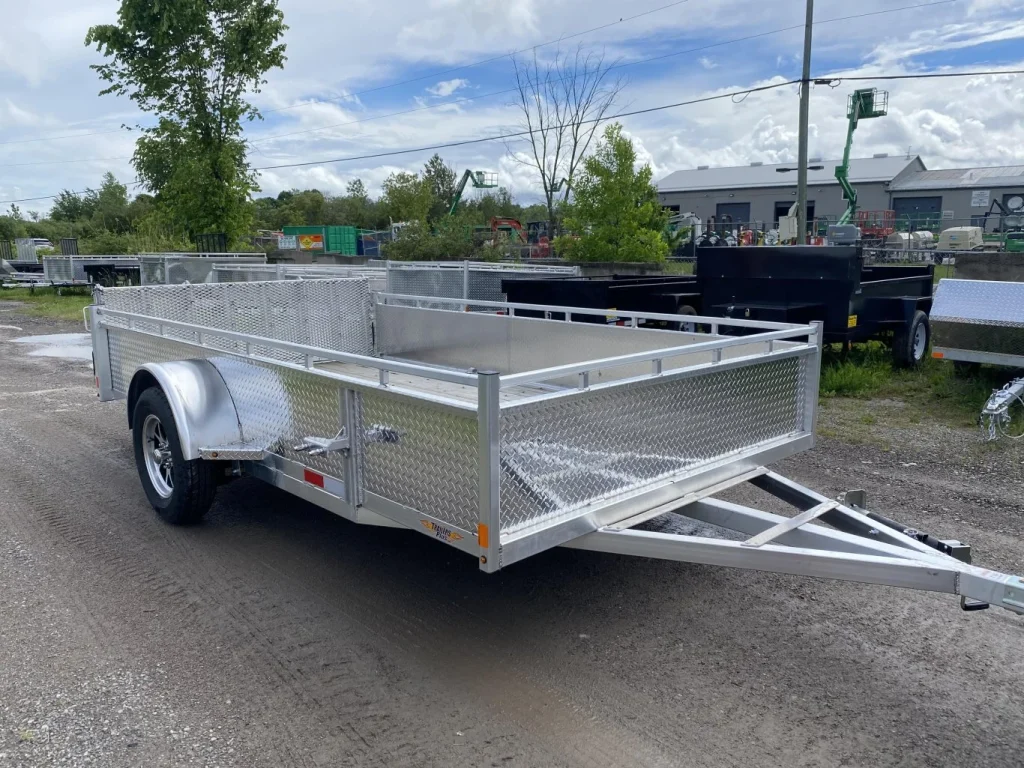
If you are searching for utility trailers for sale, you have probably noticed that there are many sizes, materials, axle configurations, and features to choose from. Finding the right utility trailer is not simply about choosing the lowest price. You need to consider what you will haul, how much weight you need to carry, how often you will tow, and whether your vehicle can safely handle the trailer and its load.
Utility trailers are popular because of their versatility. Homeowners use them for landscaping projects, moving large items, hauling firewood, transporting ATVs, and completing home improvement jobs. Contractors and businesses use them to transport tools, equipment, building materials, lawn-care equipment, and other supplies.
The good news is that once you understand the most important specifications, comparing utility trailers for sale becomes much easier. utility trailers for sale
This guide explains 9 smart tips for choosing a utility trailer in 2026, including trailer size, GVWR, payload capacity, axle configuration, materials, brakes, ramps, maintenance, and new versus used options.
Table of Contents
What Is a Utility Trailer?
A utility trailer is an open trailer designed for general-purpose hauling. Unlike an enclosed cargo trailer, a utility trailer normally has an open deck that makes it easier to load and unload large, tall, or irregularly shaped items.
Utility trailers are commonly available with:
- Wood or metal decks
- Steel or aluminum construction
- Single or tandem axles
- Side rails
- Mesh sides
- Rear ramp gates
- Electric brakes
- LED lighting
- Tie-down points
- Different GVWR ratings
- Different deck lengths and widths
Because utility trailers are available in many configurations, they can serve both occasional and professional hauling needs. utility trailers for sale
A homeowner may only need a small single-axle trailer, while a contractor or landscaping company may need a larger tandem-axle model with greater payload capacity. utility trailers for sale
The best trailer is therefore the one that matches your actual hauling requirements.
Why Buy a Utility Trailer?
One of the biggest advantages of a utility trailer is flexibility.
The open design allows you to load items that may not fit inside an enclosed trailer. You can also load cargo from the rear or, depending on the design, from the sides.
According to current trailer buying guidance, open utility trailers are particularly useful for lawn equipment, debris, ATVs, furniture, landscaping materials, appliances, and other bulky items that do not require weather protection.
A utility trailer can be useful for:
- Landscaping businesses
- Lawn-care professionals
- Construction contractors
- Farmers
- Homeowners
- Property maintenance companies
- Handymen
- ATV and motorcycle owners
- Small businesses
- DIY enthusiasts
If you frequently need to move equipment or materials, owning a utility trailer can save you from repeatedly renting one or relying on delivery services.
9 Things to Consider When Buying Utility Trailers for Sale
1. Determine What You Will Haul
Before comparing utility trailers for sale, make a list of the items you expect to transport most frequently.
For example, a homeowner might need to haul:
- Lawn mowers
- Mulch
- Firewood
- Furniture
- Appliances
- Yard debris
- Building supplies
- ATVs
A landscaping company may need space for commercial mowers, trimmers, blowers, bags of materials, and other equipment. utility trailers for sale
A contractor may need a stronger trailer for construction materials, tools, generators, compressors, or machinery.
Your cargo should determine the trailer rather than the other way around.
If you occasionally haul light materials, a smaller single-axle trailer may be enough. If you regularly carry heavy equipment, you may need a larger tandem-axle utility trailer. utility trailers for sale
2. Choose the Right Trailer Size
Trailer dimensions are among the most important specifications to consider.
Common utility trailer sizes include:
- 5 x 8
- 5 x 10
- 6 x 10
- 6 x 12
- 7 x 12
- 7 x 14
- 7 x 16
- Larger custom configurations
The ideal size depends on the dimensions of your cargo.
Measure your largest items before purchasing. You should consider both the length and width of the cargo, as well as how much room is required for safe loading and securing.
A trailer that is too small can force you to make multiple trips. A trailer that is unnecessarily large may cost more, require more storage space, and be harder to maneuver. utility trailers for sale
Current guidance from U-Haul similarly recommends matching trailer size to the dimensions, weight, and quantity of the cargo, while also considering the towing capacity of the vehicle.
3. Understand GVWR and Payload Capacity
When comparing utility trailers for sale, do not confuse GVWR with payload capacity.
GVWR, or Gross Vehicle Weight Rating, is the maximum allowable weight of the loaded trailer.
The trailer’s empty weight is part of that rating.
A simplified calculation is:
Payload Capacity = GVWR − Empty Trailer Weight
For example, if a trailer has a 7,000-pound GVWR and weighs 2,000 pounds empty, its theoretical payload capacity is approximately 5,000 pounds. utility trailers for sale
However, you should always use the manufacturer’s official specifications rather than relying on an example calculation. utility trailers for sale
GVWR is determined by factors such as the trailer frame, axles, tires, suspension, and braking system.
Never exceed the manufacturer’s rated capacity.
4. Decide Between Single and Tandem Axles
One of the biggest decisions when shopping for utility trailers for sale is choosing between a single axle and tandem axles.
Single Axle Utility Trailers
Single-axle trailers generally work well for lighter loads and buyers who prioritize maneuverability and simplicity.
They can be suitable for:
- Lawn equipment
- Small mowers
- ATVs
- Motorcycles
- Household projects
- Light landscaping materials
- Occasional hauling
Advantages can include:
- Lower purchase price
- Easier maneuverability
- Simpler maintenance
- Lower overall trailer weight
Tandem Axle Utility Trailers
Tandem-axle trailers use two axles and are generally better suited to heavier loads and frequent towing.
They can provide:
- Greater load capacity
- Increased stability
- Better weight distribution
- More flexibility for heavier equipment
- Greater suitability for frequent commercial use
Current 2026 trailer guidance notes that axle selection affects load capacity, stability, handling, and maintenance. Single-axle models are commonly suited to lighter applications, while tandem-axle models are often preferred for heavier and more frequent hauling. utility trailers for sale
The important thing is not to automatically choose the biggest trailer. Choose the axle configuration that matches your actual workload.
5. Compare Steel and Aluminum Utility Trailers
Another important decision is the construction material.
Steel Utility Trailers
Steel is popular because it offers strength and is commonly available at competitive prices.
Potential advantages include:
- Strong construction
- Wide range of configurations
- Competitive initial cost
- Suitable for demanding applications
However, steel requires appropriate care to minimize corrosion, especially when exposed to moisture, road salt, and harsh environments. utility trailers for sale
Aluminum Utility Trailers
Aluminum trailers are known for being lightweight and corrosion resistant.
Potential advantages include:
- Lower trailer weight
- Corrosion resistance
- Easier towing in some applications
- Potentially greater available payload within the tow vehicle’s limits
- Lower maintenance requirements related to corrosion
The best material depends on your priorities, budget, environment, and intended use.
If you plan to keep the trailer for many years, consider not only the purchase price but also its weight, maintenance requirements, durability, and resale value. utility trailers for sale
What Size Utility Trailer Do You Need?
There is no single utility trailer size that works for everyone.
Here is a general starting point:
| Utility Trailer Size | Common Uses |
|---|---|
| 5 x 8 | Small landscaping jobs, household hauling, ATVs |
| 5 x 10 | Lawn equipment, furniture, light materials |
| 6 x 10 | Landscaping, appliances, general hauling |
| 6 x 12 | Mowers, equipment, building supplies |
| 7 x 12 | Larger equipment and commercial hauling |
| 7 x 14 | Contractors, landscaping, heavier loads |
| 7 x 16 | Larger equipment and frequent commercial use |
These are general examples rather than strict recommendations. Actual capacity depends on the trailer’s construction, axle ratings, GVWR, empty weight, tires, and other specifications.
Before buying, measure your cargo and compare those measurements with the manufacturer’s usable deck dimensions. utility trailers for sale
Utility Trailer Features Worth Considering
The right features can make a significant difference in everyday use.
Ramp Gates
A ramp gate can make it easier to load wheeled equipment such as lawn mowers, ATVs, motorcycles, and other machinery.
Side Rails
Side rails can help keep certain types of cargo contained and may provide additional tie-down options.
Tie-Down Points
Proper tie-down locations are important when transporting equipment and other cargo.
Trailer Brakes
Depending on the trailer’s weight, configuration, and applicable laws, brakes may be required or highly beneficial.
LED Lighting
LED trailer lights can provide bright illumination and generally require less maintenance than older lighting technologies.
Spare Tire
A spare tire can be a valuable addition, especially for people who travel long distances.
Adjustable Coupler
An adjustable coupler can provide additional flexibility for different towing setups, depending on the trailer design.
When shopping for utility trailers for sale, think about the features that will save you time every time you use the trailer rather than paying for features you will rarely need.
How Much Do Utility Trailers for Sale Cost?
The price of utility trailers for sale varies considerably.
Factors that influence price include:
- Trailer size
- GVWR
- Axle configuration
- Steel or aluminum construction
- Deck material
- Brakes
- Ramp configuration
- Side rails
- Lighting
- Manufacturer
- Warranty
- Accessories
- New or used condition
Current 2026 market guides place many utility trailers in a broad range, with smaller models generally costing less and larger, heavier-duty configurations costing considerably more. Actual dealer pricing can vary based on specifications, brand, region, availability, and optional equipment.
Rather than searching for the cheapest trailer, compare the price-to-capacity ratio and overall value.
A slightly more expensive trailer may provide stronger construction, better components, greater capacity, or features that make it more useful for your work.
New vs. Used Utility Trailers
Both new and used utility trailers can be worthwhile purchases.
Benefits of New Utility Trailers
Buying new can provide:
- New components
- Less wear
- Current specifications
- More configuration choices
- Manufacturer warranty options
- Greater ability to choose features
Benefits of Used Utility Trailers
Used trailers may offer:
- Lower purchase prices
- Potential savings compared with new models
- Access to older or discontinued configurations
- Immediate availability
However, a used trailer needs a thorough inspection.
Check the:
- Frame
- Axles
- Tires
- Wheels
- Bearings
- Brakes
- Wiring
- Lights
- Coupler
- Safety chains
- Deck
- Ramps
- Gates
Look for cracks, excessive rust, bent components, uneven tire wear, damaged wiring, soft wooden decking, and signs of poor repairs.
A low purchase price is not necessarily a bargain if major repairs are needed immediately.
Utility Trailer vs. Enclosed Cargo Trailer
Many buyers also wonder whether they should choose an open utility trailer or an enclosed cargo trailer.
A utility trailer is generally better when you need:
- Easy loading
- Side access
- Oversized cargo capacity
- Open-air hauling
- Lower initial cost
- Convenient loading of equipment
An enclosed cargo trailer is generally better when you need:
- Weather protection
- Lockable storage
- Protection from road debris
- Additional security
- Covered storage
U-Haul’s current guidance similarly describes flatbed utility trailers as particularly useful for large, heavy, or awkward items, while enclosed cargo trailers are better when protection from weather and road debris is important.
If your equipment can handle exposure to the elements and you value quick loading, a utility trailer may be the better choice.
Utility Trailer Safety Checklist
Safety should always come before convenience or price.
Before towing, inspect your trailer and towing setup.
Check:
- Trailer coupler is securely attached
- Safety chains are connected
- Trailer wiring is connected
- Brake system is functioning
- Breakaway system is operational where equipped
- Tires are properly inflated
- Tires have appropriate load ratings
- Wheel lug nuts are secure
- Trailer lights work correctly
- Cargo is properly distributed
- Cargo is securely tied down
- Gates and ramps are properly closed
- Trailer does not exceed its rated capacity
Cargo securement is particularly important. Federal Motor Carrier Safety Administration guidance addresses requirements for preventing cargo from shifting or falling during transportation.
You should also follow your trailer manufacturer’s instructions and applicable state and local towing regulations.
5 Common Mistakes to Avoid When Buying a Utility Trailer
Buying Based Only on Price
The cheapest trailer may not provide the capacity, construction, or features you actually need.
Choosing a Trailer That Is Too Small
If you regularly haul large equipment, buying a small trailer to save money can become frustrating and expensive.
Ignoring Your Tow Vehicle
Your truck or SUV must be capable of safely towing the loaded trailer.
Forgetting Payload Capacity
A trailer’s physical size does not tell you how much weight it can safely carry.
Not Inspecting a Used Trailer
A used trailer should be carefully inspected before purchase, especially the frame, axles, tires, brakes, coupler, and deck.
Frequently Asked Questions About Utility Trailers for Sale
What are utility trailers used for?
Utility trailers are used for general-purpose hauling. Common applications include transporting lawn equipment, landscaping materials, ATVs, motorcycles, furniture, appliances, building supplies, tools, and other bulky items.
What is the best utility trailer size?
The best size depends on the dimensions and weight of your cargo. Measure the items you expect to haul most frequently and choose a trailer with sufficient deck space and rated capacity.
Are single axle utility trailers better than tandem axle trailers?
Neither is universally better. Single-axle trailers are often suitable for lighter loads and occasional use, while tandem-axle trailers can be preferable for heavier loads, frequent towing, and greater stability.
Are aluminum utility trailers worth it?
Aluminum can be a good choice when lower trailer weight and corrosion resistance are important. Steel may be preferable when initial cost and heavy-duty construction are the primary considerations.
How much weight can a utility trailer carry?
The amount depends on its GVWR and empty weight. Always check the manufacturer’s specifications and never exceed the trailer’s rated capacity.
Are utility trailers good for landscaping?
Yes. Utility trailers are commonly used by landscaping professionals and homeowners to transport lawn mowers, tools, mulch, plants, yard waste, and other landscaping materials.
Should I buy a new or used utility trailer?
A new trailer can offer newer components and warranty coverage, while a used trailer may cost less. If buying used, inspect the frame, axles, tires, brakes, deck, wiring, and coupler carefully.
Do utility trailers need brakes?
Brake requirements vary according to trailer weight, vehicle configuration, and applicable laws. Check the manufacturer’s specifications and the laws in your state before towing.
Final Thoughts on Utility Trailers for Sale
Finding the right utility trailers for sale starts with understanding what you actually need to haul.
Consider your cargo, trailer size, GVWR, payload capacity, axle configuration, construction material, tow vehicle, loading requirements, and budget before making a purchase.
For lighter jobs and occasional hauling, a single-axle utility trailer may provide the maneuverability and value you need. For heavier equipment and frequent towing, a tandem-axle model may provide additional capacity and stability.
You should also decide whether steel or aluminum construction makes more sense for your application and whether features such as ramp gates, brakes, tie-down points, LED lights, and side rails will improve your everyday hauling experience.
Most importantly, don’t buy based on appearance or price alone. Compare the specifications and choose a trailer that is appropriately rated for your vehicle and your cargo.
If you’re ready to compare utility trailers for sale, explore the available inventory and review each trailer’s dimensions, capacity, axle configuration, construction, and features before making your decision.
Related resources: