

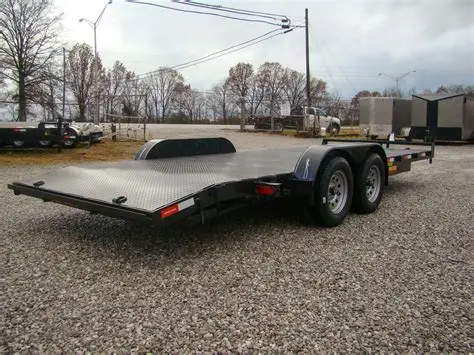
If you are searching for car trailers for sale, choosing the right trailer starts with understanding the vehicle you plan to transport. A car trailer needs to provide enough deck space, weight capacity, ramp clearance, braking capability, and tie-down points to safely carry your vehicle.
Car trailers, also called car haulers or auto transport trailers, are commonly used to move project cars, classic cars, race cars, dealership vehicles, SUVs, trucks, and other automobiles. Some buyers need a trailer for occasional personal use, while others rely on a car hauler for their automotive business.
There are many different configurations available, including open car trailers, enclosed car trailers, steel trailers, aluminum trailers, single-axle models, tandem-axle models, and heavy-duty car haulers.
That means choosing the right trailer requires more than looking at the advertised price.
In this guide, you’ll learn 10 expert tips for choosing car trailers for sale in 2026, including trailer size, vehicle weight, GVWR, payload capacity, deck width, ramps, brakes, tie-down points, construction, towing requirements, and pricing. car trailers for sale
Table of Contents
What Is a Car Trailer?
A car trailer is a trailer specifically designed to transport automobiles from one location to another.
Car trailers can be open or enclosed.
An open car trailer typically consists of a steel or aluminum frame, deck, axles, wheels, ramps, fenders, brakes, and tie-down points. car trailers for sale
An enclosed car trailer surrounds the vehicle with walls and a roof, providing additional protection from weather and road debris. car trailers for sale
Car trailers are commonly used for:
- Project cars
- Classic cars
- Race cars
- Dealership vehicles
- Vehicle relocation
- Automotive businesses
- Car shows
- Restoration projects
- Track vehicles
- Non-running vehicles
- Personal vehicle transportation
The correct trailer depends on the vehicle you are hauling and how frequently you plan to transport it.
Why Buy a Car Trailer?
A car trailer provides a convenient way to transport a vehicle without putting additional mileage on the vehicle being moved. car trailers for sale
For example, a classic-car owner may want to transport a valuable vehicle to a show without driving it long distances. car trailers for sale
A mechanic may need to move a non-running vehicle.
A car enthusiast may need to transport a project vehicle to a workshop.
A dealership or automotive business may need to move vehicles regularly.
Car trailers can also be useful for motorsports and recreational activities.
Depending on the model, benefits can include:
- Vehicle transportation
- Reduced road mileage
- Flexible loading options
- Easy vehicle relocation
- Open or enclosed protection
- Multiple tie-down locations
- Ramps for easier loading
- Heavy-duty hauling capacity
The key is selecting a trailer that is appropriately rated for the vehicle you intend to transport.
10 Things to Consider When Buying Car Trailers for Sale
1. Know Your Vehicle’s Weight
Before searching through car trailers for sale, determine the exact weight of the vehicle you intend to transport.
Don’t rely only on the vehicle’s model name.
Different versions of the same vehicle can have significantly different curb weights.
Consider:
- Curb weight
- Additional equipment
- Fuel
- Spare tires
- Tools
- Accessories
- Modifications
If you plan to transport several different vehicles, use the heaviest vehicle you expect to haul as the starting point for choosing your trailer. car trailers for sale
The trailer’s payload capacity needs to exceed the weight of the vehicle being transported.
You should also account for anything else you carry on the trailer.
2. Measure the Vehicle Before Buying
Weight isn’t the only measurement that matters.
You should also know the vehicle’s:
- Overall length
- Overall width
- Wheelbase
- Ground clearance
- Tire width
- Approach angle
- Departure angle
A trailer may have enough weight capacity but still be unsuitable if the vehicle doesn’t fit properly.
Current 2026 car-hauler buying guidance emphasizes measuring vehicle width, wheelbase, ground clearance, and weight before selecting a trailer. car trailers for sale
This is particularly important for:
- Wide trucks
- Muscle cars
- Low sports cars
- Long-wheelbase vehicles
- Modified vehicles
- Vehicles with oversized tires
Measure first, then shop.
3. Choose the Correct Trailer Length
Trailer length is one of the most important specifications.
Common car trailer lengths include:
- 16 feet
- 18 feet
- 20 feet
- 22 feet
- 24 feet
- Longer commercial configurations
An 18-foot trailer may work well for many passenger vehicles, while longer vehicles or applications involving additional cargo may require more deck length. car trailers for sale
Don’t automatically choose the longest trailer available.
A longer trailer generally means additional weight, greater storage requirements, and potentially more difficult maneuvering. car trailers for sale
Instead, compare the vehicle’s length and wheelbase with the manufacturer’s usable deck dimensions.
Current 2026 car-hauler listings and buying guides commonly feature 16- to 24-foot configurations, with capacity and deck dimensions varying by model. car trailers for sale
4. Choose the Correct Deck Width
Deck width is just as important as trailer length.
Many car haulers are designed around standard deck widths, but wider vehicles may require additional clearance.
Consider:
- Vehicle body width
- Tire width
- Fender location
- Door clearance
- Loading angle
- Tie-down access
If the trailer has raised fenders, make sure your vehicle’s tires and body can clear them.
For wider trucks, SUVs, and modified vehicles, a wider deck may provide a better loading experience.
Current 2026 car-hauler guidance notes that deck width is an important consideration, particularly for wider vehicles and muscle cars. car trailers for sale
5. Check GVWR and Payload Capacity
One of the biggest mistakes buyers make when shopping for car trailers for sale is confusing GVWR with payload.
GVWR means Gross Vehicle Weight Rating.
It is the maximum allowable loaded weight of the trailer.
That includes the trailer itself and everything being transported on it.
A simplified formula is:
Payload Capacity = GVWR − Empty Trailer Weight
For example, a trailer with a 10,000-pound GVWR that weighs 3,000 pounds empty would have a theoretical payload capacity of approximately 7,000 pounds. car trailers for sale
The actual manufacturer’s specifications should always be used.
Current 2026 car-hauler guidance specifically warns buyers not to confuse GVWR with payload capacity.
You also need to compare the loaded trailer weight with your tow vehicle’s rated towing capacity.
Never exceed the ratings provided by the trailer or vehicle manufacturer.
6. Decide Between Open and Enclosed Car Trailers
One of the biggest decisions is choosing between an open and enclosed car trailer.
Open Car Trailers
Open car trailers are popular because they are generally easier to load, provide good visibility, and can be lighter than comparable enclosed models. car trailers for sale
They can be useful for:
- Project cars
- Daily drivers
- Equipment
- Dealership vehicles
- Short-distance transportation
- Automotive businesses
Potential advantages include:
- Lower purchase price
- Lower trailer weight
- Easier access
- Simple loading
- Lower maintenance
- More visibility
Enclosed Car Trailers
Enclosed car trailers provide a roof and walls around the vehicle.
They can offer:
- Weather protection
- Additional security
- Protection from road debris
- Storage space
- Additional privacy
They can be particularly attractive for owners of valuable classic cars, race cars, show vehicles, and specialty automobiles. car trailers for sale
If protection is your highest priority, an enclosed trailer may justify the additional cost and weight.
7. Choose the Right Ramp System
The ramp is one of the most important parts of a car trailer.
A vehicle may technically fit on the trailer but still be difficult or impossible to load if the ramp angle is too steep.
This is particularly important for low-clearance vehicles.
Consider:
- Ramp length
- Ramp angle
- Ground clearance
- Approach angle
- Trailer deck height
- Breakover angle
A longer ramp can sometimes create a gentler loading angle.
This can be particularly valuable for:
- Sports cars
- Lowered cars
- Race cars
- Modified vehicles
- Classic cars
Current car-hauler buying guides specifically highlight ramp angle and ground clearance as important factors for low vehicles. car trailers for sale
Before buying, calculate how the vehicle will move from the ground onto the deck.
8. Check Brakes, Tires and Axles
A car trailer carrying several thousand pounds needs properly rated running gear.
Inspect or compare:
- Axle rating
- Number of axles
- Tire load rating
- Wheel rating
- Brake configuration
- Suspension
- Bearings
Tandem-axle configurations are common for car haulers because they can provide additional capacity and stability compared with lighter single-axle designs. car trailers for sale
For heavier commercial applications, buyers may encounter tandem-dual configurations and higher GVWR ratings.
The exact configuration should be selected according to the loaded trailer weight and tow vehicle.
Don’t assume that more axles automatically means a better trailer.
9. Pay Attention to Tie-Down Points
Properly securing the vehicle is essential.
Look for strong and conveniently positioned:
- D-rings
- Tie-down rails
- Wheel straps
- Anchor points
The tie-down system should work with the type of vehicle you transport.
For example, a low sports car may require a different tie-down approach from a heavy pickup truck.
The National Highway Traffic Safety Administration emphasizes that loads must be secured so they cannot shift, fall, or become a hazard during transportation. car trailers for sale
Always use appropriate vehicle tie-down equipment and follow the trailer and equipment manufacturer’s instructions. car trailers for sale
10. Compare Construction and Long-Term Value
When comparing car trailers for sale, don’t judge quality by paint or appearance alone.
Look at:
- Frame construction
- Crossmembers
- Deck material
- Weld quality
- Axles
- Suspension
- Ramps
- Fenders
- Tie-down points
- Brakes
- Wiring
Steel car trailers are popular because of their strength and availability.
Aluminum trailers can provide weight savings and corrosion resistance.
Your choice should depend on:
- Expected load
- Towing frequency
- Operating environment
- Budget
- Maintenance preferences
- Expected ownership period
A trailer that costs slightly more but has stronger construction and better components may provide greater long-term value. car trailers for sale
Popular Car Trailer Sizes
There isn’t one perfect size for every vehicle.
16-Foot Car Trailers
A 16-foot trailer can work for smaller vehicles and certain light-duty applications.
It may be suitable for:
- Compact cars
- Smaller sedans
- Some project cars
Always confirm the vehicle’s dimensions before purchasing.
18-Foot Car Trailers
An 18-foot car trailer provides additional deck length and can accommodate many common passenger vehicles.
It can be a practical choice for personal transportation and general automotive use.
20-Foot Car Trailers
A 20-foot configuration can provide more flexibility for longer vehicles and additional loading space.
It may be useful for:
- Trucks
- SUVs
- Classic cars
- Project vehicles
- Automotive businesses
22- to 24-Foot Car Trailers
Longer trailers can provide additional room for larger vehicles and specialized applications.
However, additional length also means more trailer weight and greater space requirements.
Make sure your tow vehicle is rated for the loaded trailer before choosing a larger configuration.
Car Trailer GVWR Examples
Car haulers commonly come in different weight-rating classes.
Some examples found in the 2026 market include approximately:
- 7,000-pound GVWR
- 9,990- to 10,000-pound GVWR
- 14,000-pound GVWR
The exact payload depends on the empty weight of the specific trailer.
For example, a 7,000-pound GVWR trailer weighing 2,300 pounds empty would have approximately 4,700 pounds of theoretical payload. car trailers for sale
A 10,000-pound GVWR trailer weighing 3,000 pounds empty would have approximately 7,000 pounds of theoretical payload.
These are illustrations, not recommendations. Always use the manufacturer’s actual specifications.
Current 2026 market guides identify 7,000-, approximately 10,000-, and 14,000-pound classes among common car-hauler configurations.
How Much Do Car Trailers for Sale Cost?
The price of car trailers for sale varies considerably.
Factors affecting the price include:
- Trailer length
- Deck width
- GVWR
- Payload
- Axle configuration
- Steel or aluminum construction
- Brakes
- Ramp design
- Tie-down equipment
- Winch
- Spare tire
- Manufacturer
- Warranty
- Open or enclosed design
- New or used condition
A basic open car hauler will generally cost less than a large enclosed car trailer with additional equipment and features.
Optional equipment can include:
- Electric winch
- Hydraulic tilt
- Toolboxes
- Additional ramps
- Spare tire
- D-rings
- Upgraded wheels
- Aluminum construction
- Interior lighting
- Additional storage
When comparing car trailers for sale, compare similarly equipped trailers rather than looking at the lowest advertised price.
Also consider the total ownership cost, including:
- Purchase price
- Sales tax
- Registration
- Insurance
- Tires
- Brake maintenance
- Wheel bearings
- Repairs
- Accessories
- Delivery
New vs. Used Car Trailers
Both new and used car trailers can make sense.
Advantages of New Car Trailers
Buying new can provide:
- New tires
- New brakes
- New running gear
- Current specifications
- Warranty options
- More configuration choices
- Lower immediate repair risk
Advantages of Used Car Trailers
Used car trailers can provide:
- Lower purchase price
- Potentially lower depreciation
- Access to older configurations
- Immediate availability
However, inspect used trailers carefully.
Look at:
- Frame
- Deck
- Ramps
- Axles
- Tires
- Brakes
- Wheels
- Coupler
- Wiring
- Tie-down points
- Suspension
Check for bent components, cracks, corrosion, damaged welds, uneven tire wear, and signs of overloading.
Car Trailer Safety Checklist
Before every trip, inspect your towing setup.
Trailer
- Tires are properly inflated
- Tires have appropriate load ratings
- Wheel hardware is secure
- Brakes are functioning
- Lights work correctly
- Coupler is properly locked
- Safety chains are attached
- Breakaway system is functioning where equipped
- Ramps are properly secured
- Tie-down equipment is in good condition
Vehicle
- Vehicle is centered properly
- Vehicle weight is within trailer capacity
- Vehicle is secured using appropriate tie-downs
- Parking brake is appropriately handled for transport
- Windows and doors are secured
- Loose items have been removed or secured
Tow Vehicle
- Hitch rating is adequate
- Towing capacity is sufficient
- Tongue weight is within limits
- Electrical connection works
- Mirrors provide adequate visibility
NHTSA recommends securing loads properly and warns against carrying excessive cargo.
Trailer manufacturers and vehicle manufacturers may also specify particular loading and towing procedures, so follow the instructions for your equipment.
Car Trailer Loading Tips
Loading a vehicle correctly is just as important as choosing the right trailer.
Position the vehicle according to the trailer manufacturer’s loading guidance.
Avoid placing excessive weight at the rear.
The loaded trailer should remain within its specified weight ratings and appropriate tongue-weight limits.
One manufacturer’s towing guidance, for example, notes that improper load distribution can contribute to trailer sway and loss of control.
After loading:
- Engage the vehicle’s parking brake as appropriate.
- Secure the vehicle with appropriate tie-down equipment.
- Check all anchor points.
- Confirm straps are properly positioned.
- Check that ramps are secured.
- Walk around the entire trailer before departure.
- Recheck the load after driving a short distance.
Never assume that one tie-down method works for every vehicle.
Common Car Trailer Buying Mistakes
Choosing Based Only on Price
A cheap trailer may not have the capacity or features you need.
Ignoring Vehicle Weight
Always know the actual weight of the vehicle you intend to haul.
Forgetting Vehicle Width
A vehicle can fit by weight but still be too wide for the deck or fenders.
Choosing a Ramp That Is Too Steep
Low-clearance vehicles may scrape during loading.
Ignoring GVWR
The trailer’s GVWR includes the trailer and its cargo.
Forgetting Tie-Down Points
A trailer should provide appropriate anchor points for securely transporting the vehicle.
Ignoring Your Tow Vehicle
Your truck or SUV must be properly rated for the loaded trailer.
Buying Too Much Trailer
A very large trailer can cost more, weigh more, and require more towing capacity than necessary.
Frequently Asked Questions About Car Trailers for Sale
What is the best car trailer size?
The best size depends on the vehicle you plan to transport. Measure the vehicle’s length, width, wheelbase, ground clearance, and weight before choosing a trailer.
What is the difference between a car trailer and a car hauler?
The terms are often used interchangeably. A car hauler is generally a trailer designed specifically to transport automobiles, while “car trailer” is a broader term commonly used for the same type of equipment.
Are open car trailers better than enclosed car trailers?
Neither is universally better. Open trailers are generally easier to load and can be lighter and less expensive, while enclosed trailers provide greater protection from weather and road debris.
What size trailer do I need to haul a car?
Many passenger vehicles can be transported on trailers around 16 to 20 feet long, but the correct size depends on the specific vehicle. Always measure before buying.
How much weight can a car trailer carry?
Payload depends on the trailer’s GVWR and empty weight. Check the manufacturer’s specifications and never exceed the rated capacity.
Do car trailers need brakes?
Brake requirements depend on the trailer, tow vehicle, weight, and applicable laws. Check the manufacturer’s specifications and your state or local requirements.
Can I haul an SUV on a car trailer?
Yes, provided the trailer has sufficient deck dimensions, payload capacity, axle ratings, brakes, and tie-down provisions for the SUV.
Can I haul a truck on a car trailer?
Many car haulers can transport pickup trucks, but you must confirm the truck’s weight, width, length, wheelbase, and ground clearance against the trailer’s specifications.
What should I look for in a car trailer?
Look at deck length, width, GVWR, payload, axle configuration, brakes, tires, ramp design, tie-down points, construction, and compatibility with your tow vehicle.
Are aluminum car trailers worth it?
Aluminum can be attractive when lower trailer weight and corrosion resistance are important. Steel may be preferable when strength and lower initial cost are higher priorities.
Should I buy a new or used car trailer?
A new trailer provides new components and potential warranty coverage. A used trailer may cost less but should be thoroughly inspected before purchase.
Final Thoughts on Car Trailers for Sale
Finding the right car trailers for sale starts with the vehicle you plan to transport.
Before comparing trailers, determine the vehicle’s weight, length, width, wheelbase, ground clearance, and loading requirements.
Then compare the trailer’s deck dimensions, GVWR, payload capacity, axles, brakes, tires, ramps, tie-down points, construction, and towing requirements.
For occasional vehicle transportation, an open car hauler may provide an affordable and practical solution. If you need protection from weather and road debris, an enclosed car trailer may be worth the additional investment.
Don’t forget the importance of loading equipment.
A trailer with the right deck size but an unsuitable ramp angle can be frustrating or even unsafe for a low-clearance vehicle.
Most importantly, never exceed the manufacturer’s weight ratings or your tow vehicle’s capabilities. Secure the vehicle properly and inspect the complete towing setup before every trip.
NHTSA emphasizes the importance of securing loads and complying with applicable trailer safety requirements.
If you’re ready to compare car trailers for sale, review the available specifications carefully and choose a trailer that matches your vehicle, towing setup, budget, and long-term transportation needs.