

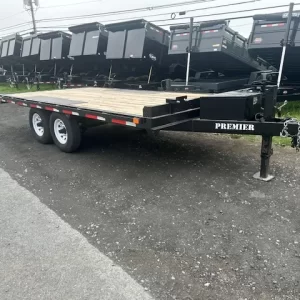
Finding the right flatbed trailers for sale can make transporting equipment, construction materials, machinery, lumber, and other bulky loads much easier. For contractors, farmers, commercial operators, and business owners, a flatbed trailer provides an open platform that can accommodate cargo in different shapes and sizes without the restrictions of enclosed walls or a fixed roof.
When searching for flatbed trailers for sale, buyers should consider more than deck length and advertised price. Payload capacity, deck width, axle ratings, brakes, tire specifications, loading ramps, tie-down points, and compatibility with the towing vehicle can all affect how well a trailer performs.
At Crystal Trailers, buyers can explore equipment trailer options designed for different hauling requirements. Depending on the cargo and application, a flatbed-style equipment trailer or deckover trailer may provide the open loading area and usable platform you need.
Not every flatbed trailer is designed for the same job. A small business moving building supplies may need a different configuration from a contractor transporting machinery or a farm operator hauling equipment between properties. Choosing the right design helps you avoid paying for unnecessary features or discovering that a trailer does not fit your actual workload.
This guide covers nine important buying considerations, explains common flatbed-style configurations, and shows you how to compare flatbed trailers for sale before making your decision.
Table of Contents
What Is a Flatbed Trailer?
A flatbed trailer is a trailer with an open, relatively level deck designed for transporting cargo that does not require an enclosed body. Its open layout can make loading and unloading bulky materials easier, especially when the cargo is too large or awkward for an enclosed trailer.
Buyers looking for flatbed trailers for sale often need to transport construction materials, machinery, equipment, pallets, lumber, steel products, landscaping supplies, or other cargo that benefits from an open platform.
Unlike enclosed cargo trailers, flatbed trailers generally provide access from multiple sides. This can be useful when loading equipment with suitable lifting machinery or securing cargo that extends across much of the deck.
However, a flatbed trailer is only suitable when its specifications match the cargo. The usable deck dimensions, load capacity, structural design, and tie-down arrangement all need to be appropriate for the intended application.
Flatbed Trailers vs. Deckover Trailers
The terms flatbed and deckover are sometimes used in related ways, but they do not always describe identical trailer designs.
A deckover trailer has a deck positioned over the wheel assemblies. This arrangement can provide a relatively unobstructed loading platform across much of the trailer width.
Other flatbed equipment trailers may have the deck positioned between or around the wheels, depending on the design. That can affect deck height, available width, loading angles, and the space required for particular types of cargo.
When comparing flatbed trailers for sale, review the actual product dimensions and photos rather than relying entirely on the product title.
For example, Crystal Trailers lists a CAM Superline 8.5 x 22 Deckover Equipment Trailer with Slide-Out Ramps. Its product details describe a flat deck, slide-out ramps, electric brakes, dual axles, and a pressure-treated wood deck. Check the live product page to confirm current specifications and availability.
Why Buy a Flatbed Trailer?
A flatbed trailer can be a practical investment when your work involves different cargo types, frequent loading, or materials that cannot easily be accommodated inside an enclosed trailer.
Here are some of the reasons buyers consider flatbed trailers for sale.
1. Open Loading Access
One of the main advantages of a flatbed trailer is the open deck. Depending on the trailer design and available equipment, cargo may be loaded from the rear or accessed from the sides.
This layout can be useful for materials that need to be lifted into position or for loads that are too wide or irregularly shaped for a conventional enclosed trailer.
Before purchasing, check the access required for your normal loading process. A trailer with ramps, for example, will have different requirements from one loaded primarily with a forklift or crane.
2. Versatile Cargo Options
A suitable flatbed trailer may carry lumber, construction materials, machinery, packaged goods, equipment accessories, and other compatible loads.
That flexibility can be useful for businesses whose transportation needs change between projects.
However, versatility does not mean that every cargo type is suitable. The load’s weight, dimensions, shape, securement requirements, and center of gravity must be considered before transport.
3. Efficient Loading and Unloading
Open-deck designs can make particular loading jobs more straightforward. Equipment may be driven onto a compatible trailer through a rated ramp system, while palletized goods may be loaded using suitable lifting equipment.
The correct deck height and loading configuration can help improve workflow.
When evaluating flatbed trailers for sale, think about who will load the trailer, the machinery involved, and the space available at both the pickup and delivery locations.
4. Useful for Business and Agricultural Work
Contractors may need a trailer for transporting equipment between sites. Farmers may use suitable open trailers to move implements or materials. Commercial operators may need to carry bulky supplies that are difficult to fit into enclosed units.
The right trailer can help support regular operations when it matches the cargo, towing vehicle, and travel requirements.
5. Flexible Trailer Configurations
Flatbed-style and deckover equipment trailers come in different sizes and configurations. Options can include multiple axle arrangements, different deck lengths, ramp systems, toolboxes, tie-down points, and specialized loading features.
You can compare relevant models through the Crystal Trailers inventory page and the equipment trailer inventory.
Types of Flatbed Trailers for Sale
The best trailer type depends on the cargo, loading method, towing vehicle, and work environment. Buyers searching for flatbed trailers for sale should identify the trailer design that best suits their daily needs before comparing individual listings.
Standard Flatbed Trailers
A standard flatbed trailer provides an open deck for cargo that fits within its rated dimensions and weight limits.
It may be useful for construction supplies, equipment, and materials that can be secured with compatible straps, chains, or other approved securement equipment.
When comparing standard flatbed models, consider deck length, width, height, load rating, tie-down locations, and how you will load and unload the cargo.
Deckover Equipment Trailers
Deckover equipment trailers position the deck above the wheel assemblies and may provide a wide loading platform.
They can be useful for suitable machinery, equipment, and materials that need more open deck space. Ramp configurations vary between models, so check the ramp type and ratings if you intend to load equipment under its own power.
Crystal Trailers lists a CAM Superline 8 x 25 Deckover Equipment Trailer with Super Ramps. The product page describes a deck with a beavertail, full-width ramps, electric brakes, D-rings, and a wood floor. Confirm the specifications and actual configuration on the live listing before buying.
Heavy-Duty Flatbed-Style Equipment Trailers
Some trailers are designed for demanding equipment transport and may feature heavier structural components, multiple axles, larger load ratings, and specialized ramps.
Buyers should verify the advertised GVWR, payload capacity, axle ratings, ramp ratings, and the tow vehicle’s capabilities. A trailer that appears large or heavy-duty is not automatically suitable for every piece of machinery.
It is important to select the trailer based on documented ratings rather than estimates made from its appearance.
Step-Deck Trailers
Step-deck trailers, also known as drop-deck trailers, have two deck levels. The lower deck can provide additional vertical clearance for certain loads compared with a conventional flat platform.
They are often used in commercial transport applications where cargo height and loading requirements make a two-level design useful.
For a related configuration, see the 2026 Fontaine 48 ft Step Deck Trailer. This is a step-deck product, not a standard flatbed trailer, but it may help buyers compare different open-deck transport arrangements.
Used and Pre-Owned Flatbed-Style Trailers
Pre-owned equipment trailers may provide an alternative for buyers who are evaluating different budgets.
Condition should be reviewed carefully. Check for frame damage, corrosion, worn tires, brake issues, damaged wiring, floor deterioration, and evidence of previous repairs.
Ask for the trailer’s condition information and maintenance history, and confirm its ratings before deciding whether it suits your application.
9 Things to Check Before Buying
When comparing flatbed trailers for sale, the following checks can help you make a more informed purchase.
1. Know the Weight of Your Cargo
Start by identifying the heaviest and largest loads you expect to carry. Include attachments, equipment accessories, pallets, packaging, and any tools that will be transported alongside the main item.
The total cargo weight should stay within the trailer’s applicable payload capacity. A trailer’s GVWR includes the trailer itself and its contents, so it should not be confused with the amount of cargo it can carry.
Confirm the specific unit’s rated specifications before ordering.
2. Check the GVWR and Payload Capacity
GVWR means gross vehicle weight rating. It is the maximum rated total weight of the fully loaded trailer.
Payload capacity represents the allowable cargo weight under the relevant specifications. It depends on the trailer’s empty weight and its rating.
For example, two trailers with the same external dimensions may have different payload capacities because of differences in design, construction, and equipment.
Do not assume that the longer or heavier-looking model necessarily carries more cargo. Check the manufacturer’s data plate and published specifications.
3. Match the Trailer to Your Tow Vehicle
Your tow vehicle must be rated to handle the loaded trailer, its hitch load, and the operating conditions involved.
Check the manufacturer’s towing capacity, payload rating, axle ratings, tire ratings, and hitch compatibility. Passengers, fuel, tools, and other items carried in the tow vehicle also affect the available capacity.
When considering flatbed trailers for sale, make sure you assess the complete towing combination rather than the trailer in isolation.
If the ratings are unclear, consult the tow vehicle manufacturer or a qualified towing professional before purchasing.
4. Select the Correct Deck Length
The deck must be long enough for the cargo and provide suitable room for loading and securement.
A compact trailer may be appropriate for smaller equipment, while longer machinery or building materials may require more usable deck space.
Measure the cargo before shopping. Account for attachments, protruding components, wheel position, and the room needed to secure the load correctly.
5. Compare Deck Width and Height
Deck width determines how much space is available across the platform. Deck height affects loading angles, cargo clearance, and the overall height of the loaded combination.
A deckover design may provide more usable width in some configurations, while another trailer design may offer a lower loading surface.
The best option depends on your cargo dimensions and loading procedure. Confirm the actual measurements instead of relying only on a general trailer size.
6. Review Ramps and Loading Equipment
If you intend to drive machinery onto the trailer, check the ramp system’s design, capacity, width, length, attachment points, and manufacturer instructions.
Ramp length affects the loading angle, while ramp capacity must be appropriate for the equipment and how its weight is distributed.
Crystal Trailers offers listings with different configurations, including the CAM Superline deckover trailer with slide-out ramps.
Make sure the actual trailer and ramp system are suitable for the equipment you plan to transport. Never assume that a ramp can support any machine that physically fits on the deck.
7. Check Axles, Tires, Brakes, and Lights
These components play an important role in the trailer’s ability to carry loads and travel safely.
Review the axle and tire ratings, braking system, electrical connections, lights, suspension, and relevant safety equipment. For a used trailer, look for unusual tire wear, damaged wiring, corrosion, leaks, and signs of poor maintenance.
Ask about maintenance and inspection records where available.
8. Inspect Tie-Down Points and Deck Condition
Tie-down points must be suitable for the type of cargo being carried. Check their location, condition, and rated strength.
Also inspect the deck surface for damage, loose boards, corrosion, or other problems that could affect loading or securement.
The cargo, securement equipment, trailer deck, and attachment points should work together as a suitable system.
For commercial hauling, consult the Federal Motor Carrier Safety Administration’s cargo securement guidance and the requirements applicable to your operation.
9. Compare the Total Purchase Cost
The advertised price is only one part of the buying decision. Depending on the order, the total cost may include delivery, applicable taxes, optional accessories, registration, hitch installation, or other preparation expenses.
Ask for a written quote and confirm what is included. Compare the total cost of similar configurations rather than focusing on one headline number.
Choosing the Right Trailer Size and Capacity
The best option among flatbed trailers for sale depends on the weight and dimensions of the cargo, your towing vehicle, and how often the trailer will be used.
A longer deck may offer greater flexibility for bulky materials, but it can require additional space for turning, parking, storage, and maneuvering. A shorter deck can be easier to position in some situations but may not accommodate long equipment.
| Use case | Features to compare |
|---|---|
| Construction materials | Deck dimensions, tie-down points, payload capacity |
| Machinery and equipment | Ramp ratings, deck height, GVWR, axle ratings |
| Lumber or long materials | Usable deck length, securement options, load distribution |
| Palletized goods | Deck width, lifting access, axle and tire ratings |
| Frequent commercial transport | Durability, maintenance requirements, brake system |
This table is a general starting point, not a substitute for the product’s ratings.
Measure Your Cargo Before Ordering
Measure the largest items you expect to carry and compare them with the trailer’s usable deck dimensions. Consider how the cargo will be loaded, secured, and unloaded.
Also account for the weight distribution and the position of the trailer’s axles. Correct loading is important for stability and component performance.
If your requirements are likely to change, choose a configuration that provides useful flexibility without buying a trailer that is unnecessarily large or incompatible with your tow vehicle.
What Affects Flatbed Trailer Prices?
The price of flatbed trailers for sale depends on several factors, including the trailer’s size, ratings, configuration, condition, manufacturer, and availability.
Trailer Size and Capacity
The trailer’s dimensions, structural design, number of axles, and load rating all contribute to its price.
A model with a greater payload rating may require different components from a lighter trailer, but the right choice depends on the cargo you actually need to haul.
Compare specifications alongside the advertised price to determine whether a model offers the features your work requires.
Deck Construction and Materials
Decking materials and structural components can affect cost, maintenance, and suitability for particular applications.
Some open-deck trailers use wood decking, while other models may use different materials. Consider durability, traction, maintenance requirements, and the type of cargo being transported.
Inspect product descriptions for the actual deck construction rather than assuming all flatbed trailers use the same materials.
Ramps and Accessories
Ramps, toolboxes, spare tire mounts, tie-down points, additional jacks, and other options can influence the overall price.
These features may be valuable when they support your regular workflow, but not every buyer needs every available accessory.
When comparing flatbed trailers for sale, identify the essential features first. This helps you avoid paying for equipment that adds little practical value to your work.
New vs. Used Condition
New trailers generally differ from pre-owned units in purchase price, condition, and available warranty terms.
With a used trailer, review maintenance records and inspect the frame, deck, tires, brakes, bearings, lights, coupler, and other major components.
A lower initial price may be attractive, but the cost of repairs and maintenance should be considered before buying.
Delivery and Other Expenses
Transport costs may depend on the trailer’s size, delivery distance, logistics arrangement, and destination accessibility.
Ask Crystal Trailers to confirm the final delivery arrangements and charges for the selected unit. Do not assume that a freight cost shown for one listing applies to every trailer or destination.
Flatbed Trailer Products at Crystal Trailers
Crystal Trailers’ website includes equipment trailer listings that can help buyers compare open-deck and deckover designs.
Start with the equipment trailer inventory or browse the full Crystal Trailers inventory to review available categories and current listings.
Here are several relevant examples:
CAM Superline 8.5 x 22 Deckover Equipment Trailer
The CAM Superline 8.5 x 22 Deckover Equipment Trailer with Slide-Out Ramps listing describes a flat deck, slide-out ramps, electric brakes, dual 7,000-pound spring axles, and a pressure-treated wood deck.
The listed product specifications include a GVWR of 15,400 pounds, an empty weight of 3,457 pounds, and a stated load capacity of 11,943 pounds. These figures relate to that specific listing and should be confirmed against the live product page and actual unit before purchase.
This example can be useful for buyers comparing deckover equipment trailer layouts and ramp configurations.
CAM Superline 8 x 25 Deckover Equipment Trailer
The CAM Superline 8 x 25 Deckover Equipment Trailer with Super Ramps provides another example for comparing deck space and loading features.
Its listing describes full-width ramps, a beavertail, electric brakes, D-rings, a wood deck, and other components. The product page also gives the specific model’s weight ratings and dimensions.
Compare these details with your equipment’s dimensions and loading requirements before deciding whether the configuration is appropriate. flatbed trailers for sale
Fontaine Step-Deck Trailer
The 2026 Fontaine 48 ft Step Deck Trailer is a related open-deck transport option, but it is a step-deck design rather than a conventional flatbed. flatbed trailers for sale
A step deck may be worth examining when the cargo dimensions or vertical-clearance requirements call for a different deck arrangement. flatbed trailers for sale
These examples are intended to help with product comparison. Inventory, pricing, and availability may change, so review the live listings before placing an order. flatbed trailers for sale
Towing, Loading, and Maintenance Tips
Buying one of the available flatbed trailers for sale is only part of the process. Proper towing setup, loading, inspection, and maintenance are important throughout the trailer’s service life. flatbed trailers for sale
Verify Towing Compatibility
Confirm that the truck, hitch, trailer, and expected cargo work together within all applicable ratings.
Check the vehicle manufacturer’s towing capacity, payload, axle limits, and hitch rating. If any of the ratings are unclear, seek qualified assistance before hauling. flatbed trailers for sale
Load and Secure Cargo Properly
Position the cargo according to the trailer manufacturer’s guidance and use securement equipment appropriate for the load. flatbed trailers for sale
Avoid exceeding weight limits, overloading one area of the deck, or allowing the cargo to shift during transport. Check that tie-down points and securement equipment are suitable for the cargo. flatbed trailers for sale
Inspect Before Use
Check tires, wheels, lights, brakes, coupler, safety equipment, ramps, and the deck before travel.
Look for signs of damage, unusual wear, corrosion, loose components, or other issues that need attention. Follow the manufacturer’s maintenance schedule and have repairs completed by qualified personnel.
Keep Maintenance Records
Regular maintenance records can help track inspections, servicing, tire replacements, brake work, and repairs.
For business owners who use a trailer frequently, a consistent maintenance process can make it easier to identify developing problems and plan servicing around work schedules. flatbed trailers for sale
For questions about Crystal Trailers’ products and support, visit the About Us page or contact the team.
Frequently Asked Questions
What are flatbed trailers used for?
Flatbed trailers are used to transport compatible equipment, construction materials, lumber, machinery, pallets, and other cargo that benefits from an open deck. The trailer’s ratings, dimensions, and securement features must match the intended load. flatbed trailers for sale
How do I choose the right flatbed trailer size?
Measure your cargo and compare its weight and dimensions with the trailer’s usable deck space, GVWR, payload capacity, and loading configuration. Also check the towing vehicle’s capacity and the space needed for loading and unloading. flatbed trailers for sale
Are deckover trailers the same as flatbed trailers?
Not always. A deckover trailer positions the deck over its wheel assemblies, whereas other flatbed designs may use different deck and wheel arrangements. Product titles and specifications should be checked to understand the exact configuration. flatbed trailers for sale
What does GVWR mean?
GVWR stands for gross vehicle weight rating. It is the maximum rated total weight of the trailer and its load. Payload capacity is the amount of cargo the trailer can carry within its rating. Check the rating plate and manufacturer’s specifications for the specific unit. flatbed trailers for sale
Are used flatbed trailers worth buying?
A used trailer may offer value when its condition, specifications, and maintenance history are appropriate for the job. Inspect the frame, deck, tires, brakes, lights, hitch, and other components, and confirm any warranty or return conditions before purchase. flatbed trailers for sale
Do flatbed trailers need ramps?
Not every flatbed trailer requires ramps. The appropriate setup depends on the cargo and loading method. If equipment will be driven onto the trailer, ensure the ramp system is specifically rated for that equipment and the intended loading arrangement. flatbed trailers for sale
What affects the price of flatbed trailers for sale?
Price can depend on dimensions, capacity, deck material, axle configuration, ramps, accessories, manufacturer, condition, and delivery requirements. Compare complete specifications and request a quote that identifies any additional charges. flatbed trailers for sale
Does Crystal Trailers offer different open-deck configurations?
The website lists deckover equipment trailers and other equipment-hauling products that buyers can compare. Review the current inventory and individual product pages, and contact Crystal Trailers to confirm whether a specific configuration is available. flatbed trailers for sale
Where can I find flatbed trailers for sale?
You can start with the Crystal Trailers equipment trailer inventory and review relevant deckover products such as the CAM Superline 8.5 x 22. Confirm the current specifications, price, and availability directly from the product listings. flatbed trailers for sale
Find the Right Trailer at Crystal Trailers
Choosing among flatbed trailers for sale starts with understanding your load, towing vehicle, and work environment. Deck dimensions, GVWR, payload capacity, ramp ratings, tie-down points, and delivery arrangements all help determine whether a trailer is appropriate for your needs. flatbed trailers for sale
A well-matched flatbed-style trailer can help contractors, agricultural operators, and businesses transport compatible equipment and materials more efficiently. The objective is to choose the configuration that meets the requirements of your actual cargo—not simply the trailer with the longest deck or the lowest advertised price.
Before buying, measure the cargo, verify the trailer’s ratings, confirm towing compatibility, and compare the complete purchase cost. If you regularly load machinery, pay particular attention to the ramp system and loading angle. If you transport bulky materials, examine the usable deck dimensions and securement options.
Ready to compare your options? Visit Crystal Trailers to explore available trailers, review the equipment trailer inventory, and compare product specifications. You can also contact Crystal Trailers to discuss your hauling requirements and confirm the details of a specific unit. flatbed trailers for sale