

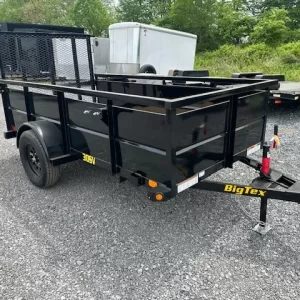
Finding the right landscape trailers for sale can help landscaping professionals, lawn care businesses, gardeners, property maintenance crews, and contractors transport their equipment and materials more efficiently. Whether you manage a professional landscaping company or maintain multiple residential and commercial properties, a suitable trailer provides a practical way to carry lawn mowers, trimmers, blowers, hand tools, plants, mulch, and other landscaping supplies between jobs.
For landscaping businesses, time matters. Loading equipment, securing materials, traveling between properties, and unloading at each job can affect how efficiently a crew works throughout the day. The right trailer helps organize these tasks by providing the deck space, loading access, and storage configuration that match your daily operations.
When comparing landscape trailers for sale, consider more than the purchase price. Deck dimensions, weight ratings, axle configuration, tires, brakes, ramp gates, side rails, and towing compatibility all influence whether a trailer is suitable for your needs. A smaller trailer may be ideal for a lawn care business with compact equipment, while a larger model may be more practical for transporting several machines and additional landscaping materials.
At Crystal Trailers, buyers can explore landscape utility trailers in different sizes and configurations. Options listed on the website include trailers with mesh sides, wood decks, rear ramp gates, and additional side-access features. These designs serve different purposes, so identifying your primary hauling requirements before buying can save time and help you choose a better fit.
This guide explains nine important things to consider when shopping for landscape trailers for sale, how to compare different trailer styles, what affects the overall cost, and how to select a trailer that supports your landscaping
Table of Contents
Find Your Landscape Trailerwork.
Why Landscaping Businesses Need the Right Trailer
Types of Landscape Trailers for Sale
9 Things to Check Before Buying
Choosing the Right Landscape Trailer Size
What Affects Landscape Trailer Prices?
Explore Landscape Trailers at Crystal Trailers
Towing, Loading, and Maintenance Tips
What Is a Landscape Trailer?
A landscape trailer is a trailer designed to transport equipment, tools, materials, and supplies used in landscaping, lawn maintenance, gardening, and property care. Many models feature open decks, side rails, mesh sides, or rear ramp gates to make loading and unloading easier.
Businesses searching for landscape trailers for sale often need a trailer that can accommodate a combination of lawn mowers, leaf blowers, trimmers, wheelbarrows, hand tools, fuel containers handled in accordance with applicable safety requirements, and landscaping materials.
The exact configuration depends on the equipment being transported. A small residential lawn care business may need only a compact utility trailer, whereas a commercial landscaping crew may require a wider or longer deck with greater payload capacity.
Landscape trailers can also be useful for homeowners who transport gardening equipment, outdoor supplies, plants, or materials for property improvement projects.
How Does a Landscape Trailer Differ From a General Utility Trailer?
Landscape trailers and general utility trailers can share many features. Both may use an open deck, trailer rails, mesh sides, and a rear gate.
A landscape-specific configuration may include features that are particularly convenient for outdoor maintenance work. Examples include a rear ramp gate for wheeled equipment, mesh sides to help contain suitable tools and materials, or a side access gate for loading smaller machinery.
The right configuration depends on your daily workflow rather than the product name alone.
When comparing landscape trailers for sale, examine the dimensions, loading access, side height, construction, and equipment ratings. These details help you determine whether a specific trailer can carry your lawn care equipment and supplies safely.
For a starting point, browse the Crystal Trailers landscape trailer inventory to compare available models.
Why Landscaping Businesses Need the Right Trailer
The right trailer can make a difference to how a landscaping crew transports equipment and organizes its daily work. However, the most useful features depend on the size of the business and the type of services it provides.
1. Transport Lawn Care Equipment
Lawn care businesses may need to transport push mowers, riding mowers, trimmers, blowers, edgers, and other equipment. A suitable trailer gives these items a dedicated transport area instead of requiring them to be moved separately.
Before choosing a trailer, measure the largest machine and consider how its wheels, handles, and attachments affect the space it needs. A mower may fit on the deck but still leave insufficient room for other equipment.
If you are comparing landscape trailers for sale for a commercial crew, plan the layout around all the equipment you expect to carry rather than the mower alone.
2. Carry Landscaping Supplies
Landscaping work may involve transporting mulch, plants, soil, pots, edging, small tools, and other supplies. Side rails or mesh sides can help contain compatible items during transport.
Loose materials should be secured or covered appropriately so they cannot spill or become airborne. Heavy materials must be kept within the trailer’s ratings and distributed according to the manufacturer’s loading guidance.
Think about the mix of cargo you carry on a typical day. A trailer used mainly for equipment may need different features from one that regularly transports plants, bags, and bulk materials.
3. Improve Loading Access
A ramp gate can make it easier to move compatible wheeled equipment onto a trailer. A trailer with an appropriate side access feature may also help when loading certain machines or reaching specific areas of the deck.
The ramp must be rated for the equipment and loading arrangement. Check the ramp dimensions, angle, attachment method, and capacity before purchasing.
For lawn care operators comparing landscape trailers for sale, loading access can be just as important as the trailer’s overall size.
4. Organize Daily Operations
A trailer with the right dimensions and configuration can help keep tools and equipment organized between jobs. Designated positions for frequently used tools can reduce unnecessary rearranging.
Many businesses benefit from planning how equipment will be secured, where supplies will sit, and how crews will access items throughout the workday.
A well-organized trailer may also make it easier to conduct an inventory check at the start or end of a shift.
5. Support Business Growth
A landscaping business may expand its equipment fleet, take on larger properties, or add services over time. The trailer you choose should account for your expected work without exceeding your budget or the capability of your tow vehicle.
Buying too small may limit what you can transport. Buying too large may add unnecessary expense and create parking, storage, and maneuvering challenges.
The goal when comparing landscape trailers for sale is to choose a configuration that serves your current operation and offers reasonable flexibility for anticipated needs.
Types of Landscape Trailers for Sale
Landscape trailers are available in several styles. Understanding the differences can help you narrow your search and compare product specifications more effectively.
Standard Open Utility Landscape Trailers
Open utility landscape trailers provide a deck with relatively simple access. They may include side rails, a rear gate, or a mesh ramp gate, depending on the design.
These trailers can be practical for lawn equipment, gardening supplies, hand tools, and other compatible cargo.
For smaller jobs, a compact model may be enough to carry the essentials without creating a large storage footprint. If you have several machines or a larger crew, compare longer and wider options.
Landscape Trailers With Mesh Sides
Mesh sides provide a barrier around the deck that can help contain compatible equipment and materials. Depending on the model, the mesh may extend above the side rails to provide additional containment height.
A mesh-sided trailer can be useful for landscaping supplies that are awkward to organize on a completely open deck.
One example on the Crystal Trailers website is the Carry-On 5 x 10 Landscape Utility Trailer with Mesh Sides. Its listing describes a treated wood floor, mesh sides, a rear mesh ramp gate, a single axle, and other specifications.
This compact configuration may be worth comparing if your equipment and total cargo weight fall within its rated limits.
Landscape Trailers With Rear Ramp Gates
A rear ramp gate can provide a transition between the ground and the trailer deck for suitable wheeled equipment. The ramp’s dimensions and rating determine which items can be loaded safely.
If you transport lawn mowers or other machinery, check the loading angle, gate width, ramp support, and deck height.
Crystal Trailers lists the Premier 6.4 x 16 Landscape Utility Trailer with Rear Ramp Gate. Its product description includes a 16-foot deck, side rail, dual axles, a rear landscape ramp gate, and electric brakes on all four wheels.
Use the product listing to review its complete current specifications and make sure they match your tow vehicle and intended load.
Landscape Trailers With Side Access
Some trailers include a side gate or side ramp, which may help when loading certain equipment or accessing parts of the deck without relying exclusively on the rear gate.
For example, the Carry-On 7 x 14 Landscape Utility Trailer with Mesh Sides and ATV Gate listing describes a rear mesh ramp gate and a side ramp.
This type of arrangement may appeal to operators who need different access options for compatible equipment. Check the actual side gate dimensions and its intended use before deciding.
Enclosed Landscape Trailers
An enclosed trailer may be appropriate when you want walls and a roof around tools and equipment. It can offer a different storage and security arrangement from an open landscape trailer.
Enclosed models generally cost more than comparable basic open trailers and may have different loading dimensions, empty weights, and maintenance needs.
Crystal Trailers lists a Covered Wagon 8.5 x 16 Enclosed Trailer with Landscape Package. Its listing describes a rear ramp door, side door, electric brakes, wall E-track, a steel floor, and other features.
Compare enclosed and open configurations according to the equipment you carry, the storage conditions you need, and the total cost.
9 Things to Check Before Buying
Before purchasing landscape trailers for sale, evaluate the following nine considerations. They will help you compare trailers based on suitability rather than appearance alone.
1. List Your Equipment and Supplies
Start by identifying everything you expect to transport. Include lawn mowers, trimmers, blowers, tools, bags, plants, and additional supplies.
Measure the largest pieces of equipment and make a rough layout of how the items could fit on the deck. Include room for safe access and securement.
This step is especially important if several crew members will share the same trailer throughout the working day.
2. Check the Trailer’s GVWR and Payload
GVWR means gross vehicle weight rating. It describes the maximum rated total weight of the trailer and its contents.
Payload capacity is the amount of cargo the trailer is designed to carry within the applicable ratings. The empty trailer itself uses part of the overall weight allowance.
For example, the Carry-On 5 x 10 Landscape Utility Trailer with Mesh Sides lists a GVWR of 2,990 pounds, an empty weight of 850 pounds, and a load capacity of 2,140 pounds. Those figures apply to that specific listing; confirm the actual unit’s data plate and specifications before loading it.
Never estimate payload from deck size alone. Your combined equipment, supplies, and accessories must remain within the trailer’s applicable ratings.
3. Match the Trailer to Your Tow Vehicle
Check the towing vehicle manufacturer’s ratings before buying a trailer. Important figures include towing capacity, payload, axle ratings, and the rating of the installed hitch.
Passengers, fuel, tools, and other cargo in the tow vehicle also contribute to its weight. The trailer’s loaded weight and hitch load must be within all applicable limits.
If you are not sure whether the vehicle can tow your chosen trailer safely, consult the vehicle manufacturer or a qualified towing professional.
4. Select the Correct Deck Length
Deck length affects how many pieces of equipment you can carry and how they can be arranged.
A 10- or 12-foot model may work for a smaller lawn care setup, while a 14- or 16-foot trailer may provide more room for larger equipment or multiple machines. These are general examples, not universal size recommendations.
When comparing landscape trailers for sale, measure your equipment and consider attachments, handlebars, mower decks, and other protruding parts.
5. Compare Deck Width and Side Height
Deck width influences how equipment fits across the trailer. Side height affects how much material can be contained, although sides do not replace proper cargo securement.
Check whether the trailer’s usable width accommodates the equipment with space to position and secure it safely.
If you transport loose or lightweight materials, consider whether mesh sides, solid sides, or a different configuration is better suited to the cargo.
6. Review the Ramp Gate
Inspect the ramp gate’s width, height, design, attachment points, and rated capacity. Consider whether the loading angle is appropriate for the equipment you use.
Not every ramp is designed for riding mowers, heavier machinery, or every type of wheeled equipment. Follow the manufacturer’s instructions and ratings.
If you need side access, determine whether a trailer with an additional side ramp or gate provides meaningful benefits for your workflow.
7. Check Axles, Tires, and Brakes
Review the axle configuration and ratings, tire load ratings, braking system, lights, wiring, and other relevant components.
A trailer must be suitable for the intended weight and road use. Make sure the braking setup is compatible with the towing vehicle and satisfies applicable regulations.
When considering a used unit, pay attention to maintenance history, uneven tire wear, corrosion, damaged wiring, and other signs that may require service.
8. Examine the Deck and Tie-Down Points
The deck should be appropriate for the load and in serviceable condition. Check wooden flooring for damaged or loose boards and inspect metal components for corrosion or damage.
Tie-down points should be properly placed and rated for the cargo being carried. Use securement equipment appropriate to the load and follow the applicable cargo-securement rules.
For landscaping equipment, plan where each mower, trimmer, blower, and accessory will sit, and make sure these items can be secured without blocking safe access.
9. Calculate the Total Purchase Cost
The advertised trailer price may not represent the total cost of ownership. You may also need to budget for delivery, applicable taxes, registration, optional accessories, maintenance, or other preparation.
Ask the seller for a complete written quote and confirm which features are included. When comparing landscape trailers for sale, use the same list of requirements for each model.
That approach makes it easier to compare value and avoid choosing a trailer that initially looks inexpensive but lacks important features.
Choosing the Right Landscape Trailer Size
The best trailer size depends on the equipment, the total weight of your cargo, and how the trailer will be used.
Smaller landscape trailers may be practical for basic lawn care equipment and limited supplies. Larger models can provide additional space for multiple machines, but they also require a suitable towing vehicle and more room for storage and maneuvering.
| Typical requirement | Features to compare |
|---|---|
| Basic homeowner landscaping | Compact deck, usable payload, rear gate |
| Small lawn care business | Deck dimensions, mesh sides, tool organization |
| Multiple mowers and equipment | Longer deck, ramp capacity, payload |
| Equipment with different loading needs | Rear and side access features |
| Tools requiring enclosed storage | Enclosed body, doors, interior securement |
These are general starting points. Always verify the equipment dimensions, actual weights, and trailer specifications before buying.
Think About Future Requirements
A trailer that meets today’s needs may become restrictive if your business adds new equipment or takes on larger jobs.
Consider whether additional deck space or a different loading configuration would be useful over the anticipated period of ownership. However, avoid buying excessive capacity if it requires a larger vehicle, greater expense, and more storage space than your operation needs.
When shopping for landscape trailers for sale, aim for a practical match between current work, expected growth, and the limits of your tow vehicle.
What Affects Landscape Trailer Prices?
The cost of landscape trailers for sale varies by size, construction, configuration, manufacturer, condition, and delivery arrangements. A single advertised price should not be treated as representative of every model.
Trailer Size and Construction
Larger trailers generally use more materials and may require different frames, axles, wheels, and other components.
Construction details can affect durability and maintenance needs. Compare the frame design, deck material, side rails, axle ratings, and intended duty rather than choosing based on overall length alone.
Mesh Sides and Ramp Options
Mesh sides, higher rails, rear ramp gates, side gates, and other loading features may influence the price.
These options can be valuable when they support the type of equipment you carry. A business that loads several wheeled machines each day may have different priorities from a homeowner who mainly transports garden supplies.
Choose the features that help you complete your work safely and efficiently.
Single-Axle vs. Tandem-Axle Configurations
Single-axle and tandem-axle trailers differ in design, capacity, and handling characteristics. The appropriate configuration depends on the manufacturer’s specifications and the intended load.
Do not assume that a particular axle count guarantees a specific payload. Check the complete rating, including the frame, tires, wheels, hitch, and other components.
New vs. Used Condition
A new trailer and a used trailer can differ in price, condition, service history, and warranty terms.
When considering a used landscape trailer, inspect the deck, frame, tires, brakes, electrical system, ramp, and hitch. Review any available maintenance records and confirm which warranties or return terms apply.
Delivery and Additional Costs
Delivery costs depend on the destination, route, trailer dimensions, and delivery arrangements. Optional accessories and registration-related expenses may add to the total investment.
Crystal Trailers provides delivery information on its website. Confirm the costs, availability, and expected timing for your specific order before making a purchasing decision.
Explore Landscape Trailers at Crystal Trailers
Crystal Trailers lists a range of landscape utility trailers for buyers with different storage and hauling requirements. You can compare models on the landscape trailer inventory page.
Here are several examples from the website:
Carry-On 5 x 10 Landscape Utility Trailer with Mesh Sides
The Carry-On 5 x 10 Landscape Utility Trailer with Mesh Sides is a compact model whose listing describes a treated wood floor, mesh sides, a rear mesh ramp gate, a 3,500-pound axle, and other specifications.
It may be worth comparing for smaller equipment loads, provided the combined cargo fits its published dimensions and weight limits. landscape trailers for sale
Carry-On 7 x 12 Landscape Utility Trailer with Mesh Sides
The Carry-On 7 x 12 Landscape Utility Trailer with Mesh Sides listing describes a deck measuring 81 inches wide by 12 feet long, 24-inch mesh sides, dual 3,500-pound axles, and a rear mesh ramp gate.
Buyers can review this configuration when comparing a wider deck with mesh-side containment for suitable equipment and materials.
Carry-On 7 x 14 Landscape Utility Trailer with Mesh Sides and ATV Gate
The Carry-On 7 x 14 Landscape Utility Trailer with Mesh Sides and ATV Gate listing describes a 14-foot deck, mesh sides, dual axles, a rear mesh ramp gate, and a side ramp. landscape trailers for sale
Compare its dimensions and features with your equipment layout and loading process before deciding.
Premier 6.4 x 16 Landscape Utility Trailer with Rear Ramp Gate
The Premier 6.4 x 16 Landscape Utility Trailer with Rear Ramp Gate listing includes a 16-foot deck, side rail, dual 3,500-pound axles, and electric brakes on all four wheels. landscape trailers for sale
Its longer deck may be worth comparing if you need room for several pieces of equipment, provided the loaded weight and dimensions stay within all applicable ratings. landscape trailers for sale
Covered Wagon 8.5 x 16 Enclosed Trailer with Landscape Package
If you prefer enclosed storage, review the Covered Wagon 8.5 x 16 Enclosed Trailer with Landscape Package.
The listing describes a rear ramp door, a side door, wall E-track, a steel floor, and an interior height of 84 inches. An enclosed trailer may be appropriate when you need a different level of storage protection, but compare its usable space, empty weight, and cost against an open landscape trailer. landscape trailers for sale
Product availability, specifications, and prices can change. Always consult the current listing before ordering.
Towing, Loading, and Maintenance Tips
Choosing among landscape trailers for sale is only the first step. Regular inspection, appropriate loading, and maintenance are important for reliable trailer use. landscape trailers for sale
Verify Tow Vehicle Compatibility
Confirm that your vehicle is rated for the trailer and its anticipated load. Review the manufacturer’s towing, payload, axle, tire, and hitch specifications. landscape trailers for sale
Do not exceed the capacity of any part of the towing combination. If you are uncertain about the correct setup, seek guidance from the vehicle or trailer manufacturer. landscape trailers for sale
Load Equipment Carefully
Arrange equipment according to the trailer manufacturer’s loading instructions. Distribute weight appropriately, use suitable tie-downs, and prevent loose tools or materials from moving during travel.
Do not exceed the trailer’s rated payload or overload the ramp. Make sure the equipment being loaded is compatible with the gate’s design and rating. landscape trailers for sale
Inspect Before Each Trip
Check the tires, lights, brakes, hitch, safety chains, ramp, deck, and visible structural components before use.
Look for unusual wear, damaged wiring, loose fasteners, corrosion, or other problems. Address defects before towing. landscape trailers for sale
Maintain a Consistent Service Schedule
Follow the manufacturer’s maintenance recommendations for wheel bearings, tires, brakes, lights, and other components.
Keep records of inspections, adjustments, replacements, and repairs. This is especially useful for commercial landscaping businesses that use their trailers frequently. landscape trailers for sale
Keep Tools and Materials Organized
Use appropriate storage boxes or other accessories where suitable, and organize equipment so that heavy items are secured and frequently used tools remain accessible.
For commercial operators, a repeatable loading layout can help crews check that required equipment is on board before leaving each property. landscape trailers for sale
Frequently Asked Questions
What are landscape trailers used for?
Landscape trailers are used to transport lawn mowers, trimmers, blowers, gardening supplies, plants, landscaping materials, and other compatible equipment. The appropriate model depends on the size and weight of the cargo and the way it will be loaded. landscape trailers for sale
How do I choose between a 5 x 10, 6 x 12, or 7 x 14 landscape trailer?
Begin by measuring your equipment and calculating the total loaded weight. Compare the trailer’s usable deck dimensions, ramp configuration, GVWR, payload, and tow vehicle compatibility. Larger is not automatically better if you do not need the added space. landscape trailers for sale
Are mesh sides useful on landscape trailers?
Mesh sides can help contain compatible tools and materials and make certain loads easier to organize. They do not eliminate the need to secure cargo or ensure that the trailer is not overloaded. landscape trailers for sale
Should I buy a trailer with a rear ramp gate?
A rear ramp gate may be useful when loading compatible wheeled equipment. Check the ramp’s dimensions, angle, attachment system, and load rating. If you do not need to load wheeled machinery, a simpler configuration may be adequate. landscape trailers for sale
Is an enclosed landscape trailer better than an open trailer?
The right choice depends on the equipment and storage conditions you need. Open trailers provide convenient access and can suit many landscaping loads. Enclosed trailers offer walls and a roof, but their price, weight, and interior access may differ. Compare the total specifications before buying. landscape trailers for sale
What affects the price of landscape trailers for sale?
Price depends on size, construction, axle configuration, capacity, mesh sides, ramps, accessories, condition, and delivery. Request a written quote and confirm which features are included. landscape trailers for sale
Can I use a landscape trailer for general utility work?
A landscape trailer may also be suitable for compatible general-purpose cargo, provided the dimensions, loading features, securement arrangements, and weight ratings match the job. landscape trailers for sale
Where can I find landscape trailers for sale?
Browse the Crystal Trailers landscape trailer inventory to compare available options. Individual listings include product details that you can review before contacting the dealership to confirm availability and delivery.
Does Crystal Trailers offer different trailer sizes?
The website lists landscape utility trailers in a range of sizes and configurations. Check the live inventory and product pages to see which models are currently listed and confirm the specifications for the unit you are considering. landscape trailers for sale
Find Your Landscape Trailer at Crystal Trailers
Choosing from the available landscape trailers for sale starts with identifying your equipment, the amount of deck space you need, and the towing capacity of your vehicle. landscape trailers for sale
The right trailer can help a lawn care company, landscaping contractor, property maintenance crew, or homeowner transport compatible equipment and supplies in an organized way. Features such as mesh sides, ramp gates, side access, and enclosed storage each serve different needs, so it is worth comparing actual product specifications instead of relying only on appearance. landscape trailers for sale
Before purchasing, measure your equipment, verify the payload and other ratings, inspect the loading features, and calculate the total cost, including delivery and any necessary accessories. These checks can help you choose a trailer that fits both your daily work and your budget. landscape trailers for sale
Ready to find the right trailer for your landscaping needs? Visit the Crystal Trailers landscape trailer inventory to compare available models. You can also explore the full trailer inventory or contact Crystal Trailers to ask about a specific model, its current specifications, and delivery arrangements. landscape trailers for sale